
When it comes to fire safety, one small device often stands between you and disaster – the smoke detector. These unassuming gadgets might not get much attention day-to-day, but when the worst happens, they can make all the difference.
A working smoke alarm gives you the vital early warning needed to escape before a fire spreads, saving lives and protecting property. It really is that simple: smoke detectors save lives.
Are You Up to Date with Smoke Detector Regulations?
Back in October 2022, the government introduced the Smoke and Carbon Monoxide Alarm (Amendment) Regulations 2022 – legislation that tightened the rules around the installation and maintenance of smoke and carbon monoxide alarms in rented and commercial properties.
These regulations set clear expectations for landlords and business owners:
- You must have at least one smoke alarm on every floor of living accommodation.
- A carbon monoxide alarm must be installed in any room containing a fixed combustion appliance (excluding gas cookers).
- Faulty alarms must be repaired or replaced immediately once found to be defective.
Following the 2022 updates, further fire safety regulations were introduced in January 2023 for mid and high rise buildings. These include additional responsibilities for landlords and responsible persons, ensuring ongoing compliance, maintenance and record-keeping.
In short: if you’re responsible for a property, you’re responsible for the alarms inside it.
What Exactly Are Smoke Detectors?
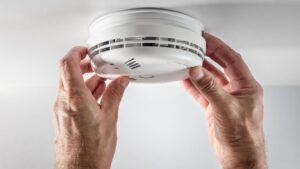
Most of us hardly notice our smoke alarms until one starts beeping – or worse, goes off during dinner. But these quiet protectors are essential to fire safety.
In homes, smoke detectors should be installed:
- On every level of the property
- Inside bedrooms and kitchens
- In hallways or landings, centrally placed for maximum coverage
If you’re unsure where to position them, professional installers (*wink-wink* like our KJ Fire Safety team!) can help make sure your alarms are optimally placed.
The 4 Main Types of Smoke Alarms
Not all smoke detectors are created equal. Here’s a quick guide to the most common types in the UK:
1. Ionisation Smoke Alarms
- Best for fast-flaming fires (paper, wood)
- Highly sensitive and affordable
- Can cause false alarms from toasters and candles, so not ideal for kitchens
2. Optical (Photoelectric) Smoke Alarms
- Detect slow-burning fires (upholstery, wiring)
- Slightly pricier but more reliable
- Better suited for hallways and near kitchens
3. Heat Alarms
- Detect heat rather than smoke – ideal for kitchens, garages and workshops
- Cover a smaller area, so large spaces may need multiple units
4. Combined Alarms
- Offer dual protection, often combining heat and optical sensors
- Help reduce false alarms while providing early detection
Don’t Forget Carbon Monoxide Detectors
While not technically smoke alarms, carbon monoxide (CO) detectors are just as vital. CO is a colourless, odourless gas that can be fatal – and you won’t know it’s there without an alarm.
Some modern smoke alarms also detect CO, using different sounds to signal each type of danger. If yours don’t, install a separate CO alarm immediately.
How Do Smoke Detectors Work?
Most smoke detectors are powered by:
-
Mains electricity
-
Replaceable batteries
-
Or a combination of both for backup security
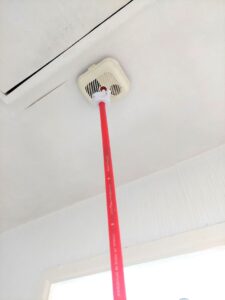
Battery-powered models typically need replacements every 12 months, and all alarms should be tested weekly or monthly. A simple light sensor detects when smoke interrupts its beam — triggering the alarm. That’s why fresh batteries and regular testing are crucial.
Testing and Maintenance Schedule
-
Homes: Test weekly (or at least once a month)
-
Businesses: Schedule professional inspections every 6 months
At KJ Fire Safety, we provide full Fire Risk Assessments, smoke detector installation, and maintenance plans to help you meet legal and safety standards.
Stay Protected with KJ Fire Safety
At KJ Fire Safety, our mission is simple – to keep you, your tenants, and your business safe.
We offer:
-
Professional installation and testing of smoke and carbon monoxide alarms
-
Fire safety training for teams and staff
-
Full Fire Risk Assessments and compliance audits
If you’re unsure about your property’s fire safety setup, get in touch with us today.
Let’s make sure your smoke detectors – and your peace of mind – are in perfect working order.
📞 Contact KJ Fire Safety to book your fire safety inspection or consultation.
Recent Comments